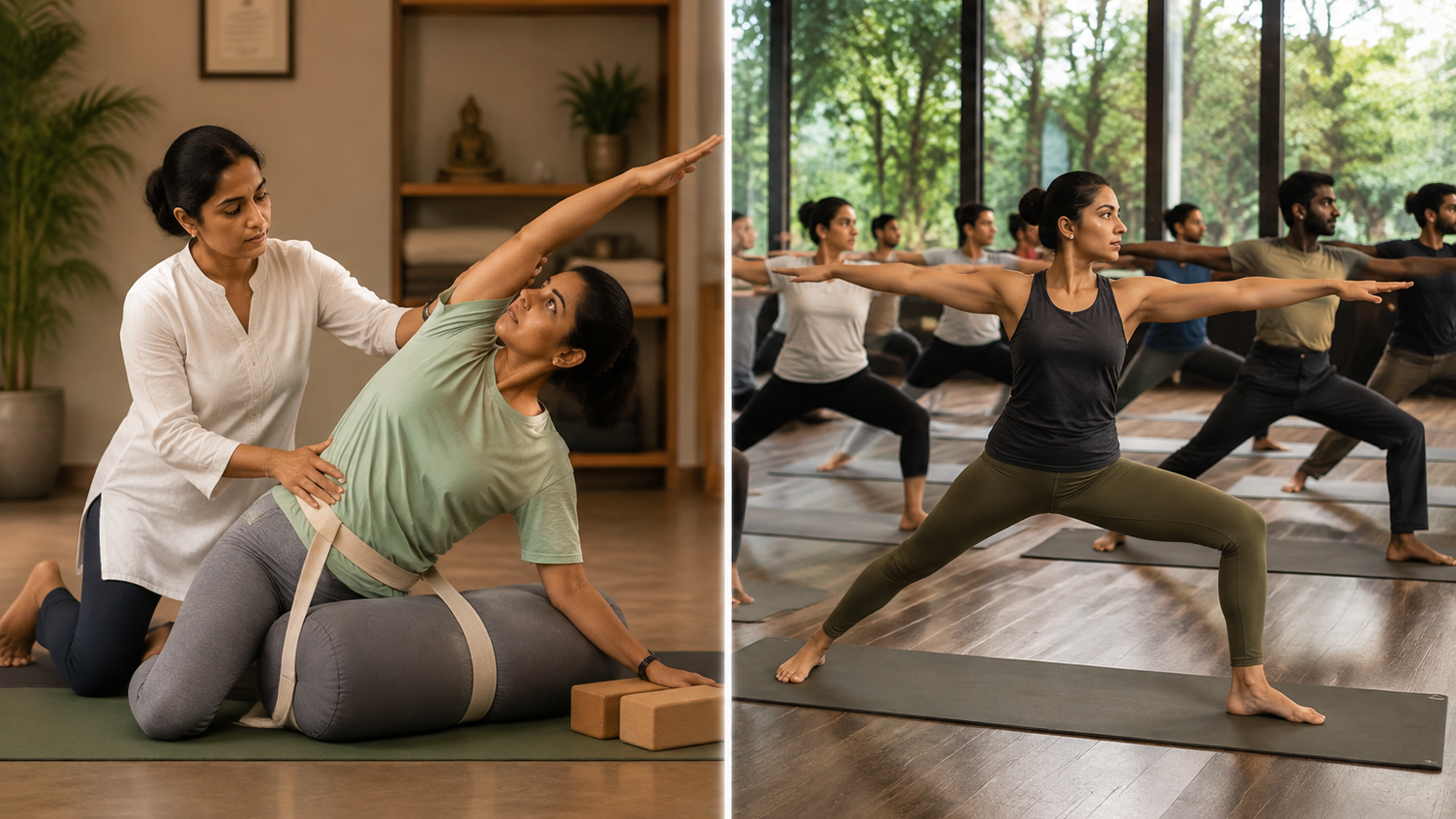

Yoga is widely practised for flexibility, strength, relaxation, and overall well-being. Walk into a typical yoga class, and you may find several people following the same sequence of postures, breathing exercises, and relaxation techniques. While this approach can work well for general wellness, it may not always address the specific needs of someone dealing with pain, restricted movement, stress-related concerns, or recovery from a health condition.
This is where therapeutic yoga takes a different approach. The distinction between therapeutic yoga and regular yoga is not simply about performing easier or more difficult poses. Therapeutic yoga uses yogic practices in a more individualised and goal-oriented manner, taking a person’s physical condition, limitations, lifestyle, and wellness needs into account.
What Is Regular Yoga?
Regular yoga generally refers to yoga practised for overall physical and mental well-being. A typical session may include asanas, breathing techniques, relaxation, and sometimes meditation. Classes can focus on different goals, such as improving flexibility, building strength, developing balance, reducing everyday stress, or simply maintaining an active lifestyle.
Typically, participants in groups go through a similar sequence, but facilitators may suggest some variations. That means many people who are generally healthy and want to incorporate yoga into their wellness routine are good candidates for regular yoga. Usually the aim is not to solve a specific physical problem, but to improve the general condition through regular practice.
What Makes Therapeutic Yoga Different?
Therapeutic yoga takes a more personalised approach. Rather than beginning with a standard class sequence, the practice is adapted according to the individual’s needs and abilities. A person’s mobility, pain levels, physical limitations, health history, age, and wellness goals may all influence the practices selected.
So therapeutic yoga benefits can be very different from one person to another. For one person, that might mean gentle movements to improve mobility; for another, it might be more about breathing, relaxation, posture, or gradual strengthening. The thing is not to get the body into a certain position but to use appropriate yoga techniques to support the person’s general health and functional needs.
Therapeutic Yoga Is Personalised, Not One-Size-Fits-All
One of the clearest differences between the two approaches is personalisation. In a regular yoga class, an instructor usually needs to consider the requirements of the entire group. In therapeutic yoga, greater attention can be given to the individual.
With personalized yoga therapy, movements and practices can be modified according to what the person can comfortably perform. For example, someone with limited knee mobility may require a different approach from someone experiencing stiffness after spending long hours at a desk. Even two people experiencing discomfort in the same area may have very different requirements.
This individualisation can make therapeutic yoga particularly relevant for people who feel uncomfortable or unable to participate fully in conventional group classes.
Can Therapeutic Yoga Be Used for Pain?
Sometimes people who have ongoing pain don’t move because they are afraid of making things worse. But inactivity can also affect mobility, strength, and confidence. In appropriate circumstances, appropriately guided movement may be integrated into a larger plan for rehabilitation or wellness.
Therapeutic yoga for pain may involve gentle movement, stretching, breathing techniques, relaxation, and carefully selected postures. The approach should depend on the underlying reason for the pain and the individual’s condition rather than simply applying the same exercises to everyone.
Importantly, yoga should not replace appropriate medical diagnosis or treatment. New, severe, unexplained, or persistent pain should be medically assessed. Therapeutic yoga can instead be considered as a complementary approach when it is appropriate for the individual’s circumstances.
The Role of Breathing and Relaxation
Therapeutic yoga is not limited to physical postures. Breathing and relaxation can be equally important components of the practice. Stress can influence muscle tension, sleep, energy levels, and the way people experience physical discomfort, making mind-body practices relevant to a broader wellness programme.
Breathing exercises can be adapted to the person’s needs, while relaxation practices may lead to greater awareness of physical and mental tension. This leads to a more holistic experience that is not focused solely on how far one can stretch or how long one can hold a posture.
Regular yoga also incorporates breathing and relaxation, but therapeutic sessions can use these practices more specifically according to individual requirements.
Is Therapeutic Yoga Only for People With Health Problems?
No. Although therapeutic yoga can be useful for people with specific physical concerns, it is not limited to those recovering from illness or experiencing pain. Beginners, older adults, people with restricted mobility, individuals returning to activity after a long break, and those seeking a more personalised wellness programme may also explore it.
Someone who finds conventional classes too fast or physically demanding may appreciate the individualised pace. Similarly, people who want to understand how yoga can be adapted to their bodies rather than forcing their bodies into standard postures may find therapeutic yoga more suitable.
Therapeutic Yoga vs Regular Yoga: Which Should You Choose?
There is no universal answer because both approaches have their place. If you are generally healthy, comfortable exercising in a group, and interested in flexibility, strength, relaxation, or general wellness, a regular yoga class may suit you well.
If you have particular limitations, chronic pain, mobility issues, or need more support, therapeutic yoga may be a better place to start. In comparing therapeutic yoga vs regular yoga, it’s less about which is “better” and more about which is best for your needs at this time.
A qualified professional can help determine appropriate modifications, especially when existing health concerns need to be considered.
Experience Therapeutic Yoga at Wellness By Heartfulness
At Wellness By Heartfulness, we look at well-being as an interconnected experience involving the body, mind, and inner state. Our Therapeutic Yoga offering is part of an integrative wellness environment at Kanha Shanti Vanam, where traditional wellness practices and complementary approaches come together to support individual needs.
Our approach to personalized yoga therapy recognises that every person’s body, lifestyle, and wellness journey can be different. Therapeutic Yoga can be integrated with other wellness offerings available at the centre, including Ayurveda, Panchakarma, Naturopathy, Physiotherapy, and complementary Heartfulness-based practices when appropriate. Rather than treating yoga as a standard exercise routine, we aim to create a supportive experience where practices are selected with the individual’s overall well-being in mind.
Making Yoga a Sustainable Part of Your Life
The effectiveness of any yoga practice depends partly on whether it can be followed consistently. A demanding routine that feels uncomfortable or unrealistic may be difficult to sustain. Therapeutic yoga places greater emphasis on finding practices that can be incorporated into a person’s capabilities and daily routine.
The healing properties of yoga should be seen as part of an ongoing wellness journey, not as an immediate cure. Therapeutic yoga can help with movement, relaxation, body awareness, and well-being within the limits of the individual, with proper guidance, regular practice, and realistic expectations.
Frequently Asked Questions
1. What is the difference between therapeutic yoga and regular yoga?
Regular yoga usually follows a general practice for fitness and well-being, while therapeutic yoga is adapted to an individual’s physical condition, limitations, and wellness goals.
2. Is therapeutic yoga suitable for beginners?
Yes. Therapeutic yoga can be suitable for beginners because movements and practices can be modified according to the individual’s comfort, mobility, and experience level.
3. Who can benefit from therapeutic yoga?
It can be useful for people with mobility limitations, physical discomfort, stress, age-related concerns, or anyone wanting a more personalized approach to their yoga practice. Suitability should be based on an individual’s health status.
4. Is therapeutic yoga effective for chronic pain?
Therapeutic yoga for pain may support some people with gentle movement, mobility, relaxatio,n and body awareness. Chronic or unexplained pain should be properly diagnosed first, and yoga should be an adjunct to appropriate medical care.
5. How often should you practise therapeutic yoga?
Frequency depends on individual needs, physical condition, goals, and the practices being used. A trained professional can recommend a suitable schedule and help adjust the programme as the individual’s needs change.