
There is a strange kind of tiredness many people carry now. Not always serious enough to stop daily life, but still there in small ways. Heavy digestion after meals, poor sleep, sugar cravings, bloating, low energy in the afternoon, headaches that appear without warning. These things slowly become normal. At Wellness by Heartfulness, we often notice that people do not always connect these everyday struggles with the way they eat. Ayurveda looks at food differently. It is not only about calories or trends or strict diet charts. Food is treated more like a daily influence on the body and mind.
Some meals calm the system while others slowly create imbalance over time. Lifestyle disorders like diabetes, obesity, high blood pressure, and digestive discomfort often grow quietly through habits that seem harmless in the beginning. That is why a simple and balanced diet for lifestyle disorders ayurveda approach still feels meaningful today. It does not demand perfection. It asks people to notice what the body accepts easily and what keeps disturbing it.
Foods That Help The Body Feel Lighter
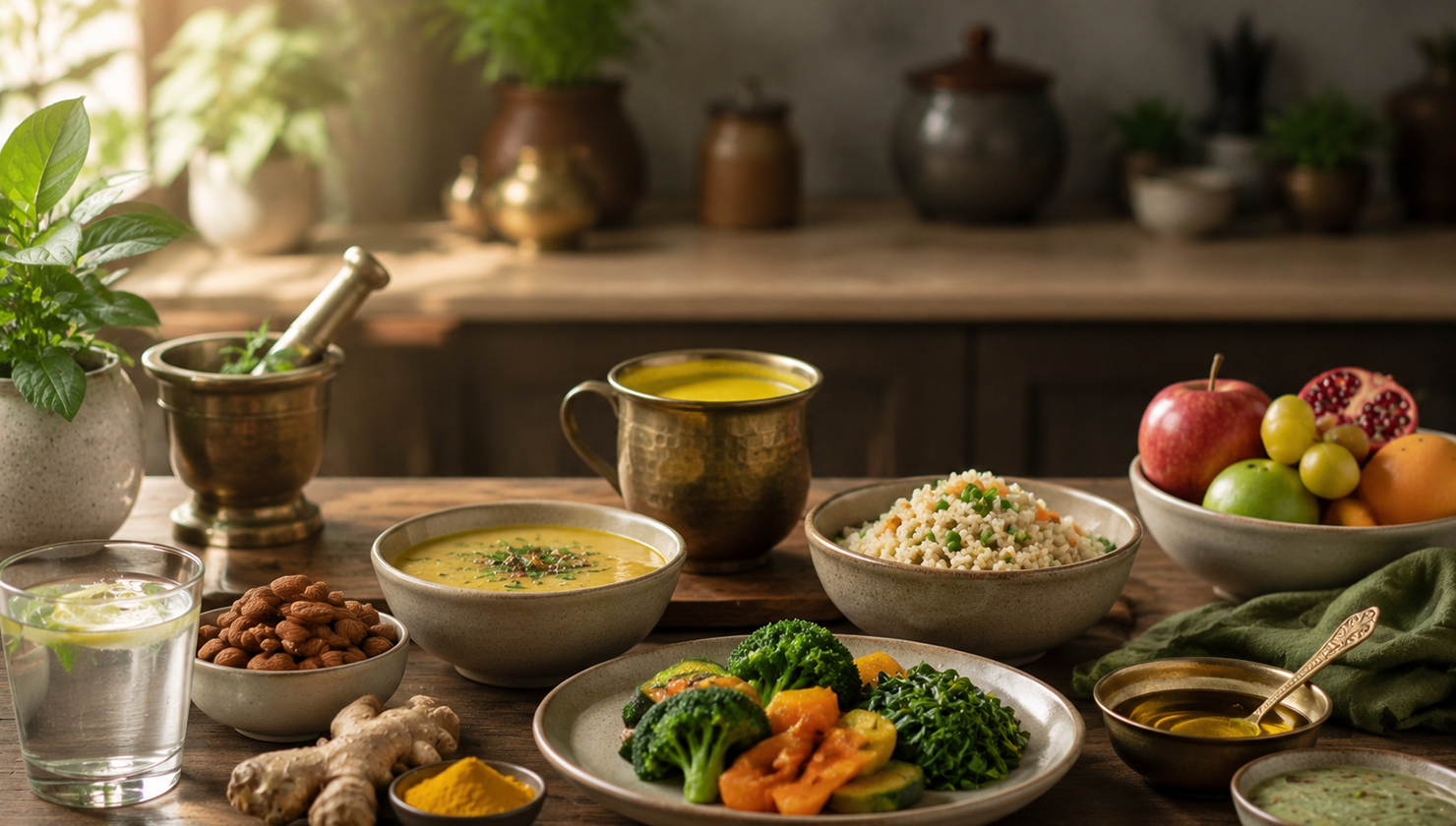
Ayurveda usually prefers freshly cooked meals over packaged food or leftovers stored for too long. Warm food is considered easier to digest because the stomach does not struggle as much to process it. At Wellness by Heartfulness, we often encourage meals that feel simple and steady instead of overly rich or heavy. Some examples of ingredients which can be found in the Ayurvedic diet include rice, millet, moong dal, mildly cooked vegetables, buttermilk, fruits, soaked nuts, and gentle spices such as cumin, coriander, turmeric, and fennel. These ingredients help in digestion without overwhelming the body.
For instance, many individuals who are battling weight gain or diabetes may be shocked to learn that Ayurvedic treatment does not always emphasize on reducing their food intake but rather eating correctly. It is usually the late night meals, eating out of emotions, eating very fast or even timing of meal intakes that cause digestive problems.
Routine matters too. Eating meals at similar times each day allows digestion to settle into a rhythm. It sounds very ordinary, maybe even too simple, but the body responds strongly to consistency. This is why ayurvedic nutrition for diabetes and obesity often includes warm breakfasts, lighter dinners, fibre-rich foods, and fewer processed snacks. The idea is not strict control. The idea is steadiness.
Foods Ayurveda Usually Suggests Reducing
Some foods create heaviness very quickly when eaten regularly. Deep-fried snacks, packaged sweets, refined flour, sugary drinks, processed meat, excess cheese, and oily restaurant meals are common examples. Ayurveda sees these foods as difficult for digestion when they become daily habits. At Wellness by Heartfulness, many people speak honestly about how modern life pushes them toward convenience. Long office hours, stress, late sleeping patterns, and constant screen time make it easy to eat whatever feels quick. The issue is usually not one unhealthy meal. It is repeated over months and years.
Ayurveda also pays attention to food combinations. Cold drinks with meals, fruit mixed heavily with dairy, rich desserts late at night, or very heavy dinners are generally discouraged because they can slow digestion and create discomfort. When people search for foods to avoid in an Ayurveda diet in India, they often expect a strict list with permanent restrictions. Ayurveda is usually softer than that. It pays attention to patterns more than isolated mistakes. If certain foods repeatedly create acidity, fatigue, bloating, or disturbed sleep, the body is already giving signals.
Another thing Ayurveda notices is constant snacking. Many people barely leave space between meals now. The stomach remains active all day without proper digestion finishing. Ayurveda often values small pauses between meals so the digestive system can rest and reset naturally.
Eating According To Daily Rhythm
One thoughtful part of Ayurveda is how closely it follows natural rhythms during the day. Digestion is considered strongest around midday, which is why lunch is often treated as the main meal. Dinner is usually lighter because the body naturally slows down in the evening. At Wellness by Heartfulness, we often see the opposite pattern. Breakfast becomes rushed, lunch is irregular, and dinner turns into the heaviest meal because it is the only relaxed moment after work. Over time, this can affect digestion, sleep, energy, and weight.
Ayurveda also changes food choices according to the season. Cooling foods may feel more suitable during intense summer heat, while warmer meals and spices support the body better during colder weather. This seasonal awareness encourages people to stay connected to how the body feels instead of following the same diet every month. Small habits matter too. Sitting down peacefully while eating, chewing slowly, avoiding screens during meals, and stopping before feeling too full are all seen as part of good digestion. These are very ordinary things, but modern routines often push them aside.
That is why healthy ayurvedic eating habits India are less about strict food rules and more about rhythm and awareness. The body usually responds well when eating becomes calmer and more predictable.
How Wellness By Heartfulness Supports Holistic Healing
At Wellness by Heartfulness, we believe lifestyle disorders rarely come from only one reason. Stress, sleep, movement, emotions, and food quietly affect one another every day. That is why we combine Ayurveda, Naturopathy, Physiotherapy, and other healing therapies instead of depending on only one path. Surrounded by the peaceful environment of Kanha Shanti Vanam, our centre focuses on holistic care for the mind and body together. With expert doctors, therapists, therapy rooms, and natural healing methods, we support people dealing with diabetes, thyroid concerns, blood pressure issues, migraines, back pain, kidney disorders, liver conditions, skin diseases, and many other long-term health struggles.
Through Panchakarma therapies, guided food routines, naturopathy care, movement therapy, and supportive lifestyle changes, and ayurvedic diet plan for lifestyle diseases, we try to help people reconnect with habits that feel sustainable in real life. The goal is not to chase perfect health. The goal is to reduce strain on the body little by little. Many people arrive expecting something complicated and later realize that simple routines often carry the deepest effect.
Final Words
Modern lifestyle disorders are often connected to speed. Fast meals, fast schedules, fast stress, and fast relief. Ayurveda moves in a quieter direction. It asks people to slow down enough to notice what food is actually doing inside the body. At Wellness by Heartfulness, we do not see Ayurvedic eating as a temporary trend or strict diet plan. Warm meals, regular timing, simpler ingredients, and mindful eating may not sound dramatic, but these habits often create meaningful change over time. The body usually speaks softly before illness becomes serious. Ayurveda pays attention to those smaller signals early. Maybe that is why people still return to it, even in a world always searching for quick solutions.
FAQs
What is an Ayurvedic diet for lifestyle disorders?
An Ayurvedic diet supports digestion, balance, and steady energy through fresh meals, mindful eating habits, and simple routines.
Which foods should be avoided in Ayurveda?
Ayurveda usually advises reducing processed foods, deep-fried meals, sugary drinks, excess sweets, and very heavy late-night eating habits.
Can Ayurveda help manage diabetes and obesity?
Ayurveda supports diabetes and obesity management through balanced meals, digestion-focused routines, mindful eating, and healthier everyday lifestyle practices.
How does diet affect dosha balance?
Food influences digestion, energy, sleep, emotions, and body balance, which Ayurveda closely connects with maintaining stable dosha health.
What are the best foods for daily Ayurvedic nutrition?
Fresh grains, vegetables, lentils, seasonal fruits, gentle spices, nuts, and warm homemade meals support Ayurvedic nutrition naturally every day.